How to Unclog a Drain
Unclog a kitchen or bathroom drain with hot water, pliers, baking soda and vinegar, and the P-trap under the sink, before you reach for chemicals.

You will work through four fixes, easiest first, and stop at the one that clears your drain. The first one is mostly waiting for hot water, and when the problem is soap scum or grease near the top, it can be all you need. Start there and work your way down only if you need to.
Do not pour a bottle of chemical drain cleaner into a drain that is not moving. That is the exact case Poison Control warns about, because the product sits in the pipe and can splash back out.
There are faster and safer ways to handle it. Sink and shower clogs often sit close to the top, in the stopper or in the curved trap under the sink. Hair, soap buildup, food scraps, and grease are the usual suspects. In a sink, you can reach both without a plumber.
Boiling water from a kettle or pot if your drain pipes are metal, or very hot tap water if they are plastic (white PVC or black ABS). Baking soda and white vinegar from the kitchen. A pair of needle-nose pliers or a bent wire hanger for pulling out hair clogs. A small bucket and towel if you need to open the P-trap under the sink. Rubber gloves and safety goggles if a chemical drain cleaner has already gone down the drain.
Start with a hot water flush
Heat a full kettle or large pot of water, boiling if your drain pipes are metal and very hot from the tap if they are plastic (see the warning below). Remove any standing water from the sink if you can. Pour the hot water directly into the drain in two or three stages, waiting a few seconds between pours. The heat melts soap scum and loosens grease that may be causing the blockage. When the clog is soap scum or grease near the top of the pipe, this alone can clear it. Wait a minute and see if the water drains normally.
Heads up: Do not pour boiling water into a toilet bowl, because a sudden jump in temperature can crack the porcelain. And look under the sink first. If the drain pipes are plastic, white PVC or black ABS, use very hot tap water instead of boiling. A pipe maker's technical manual lists a maximum operating temperature of 140°F for both, and boiling water is 212°F. Going past that rating risks weakening the pipe and its glued joints, and it applies to new pipe as much as old.
Pull out visible debris
If the hot water did not clear it, the clog is probably physical. Remove the drain cover or stopper. Some pop-up stoppers lift or twist straight out. Others are held by a horizontal pivot rod under the sink, which you unscrew by its nut and pull back before the stopper will come up. Shine a flashlight into the drain and look for a clump of hair, soap buildup, or food stuck in the first inch or two. Use needle-nose pliers, a bent wire hanger, or even a zip-tie with small notches cut into it to pull the debris out. This is unpleasant, and in bathroom sinks and showers, where hair collects, it is the fix that works.
Use baking soda and vinegar
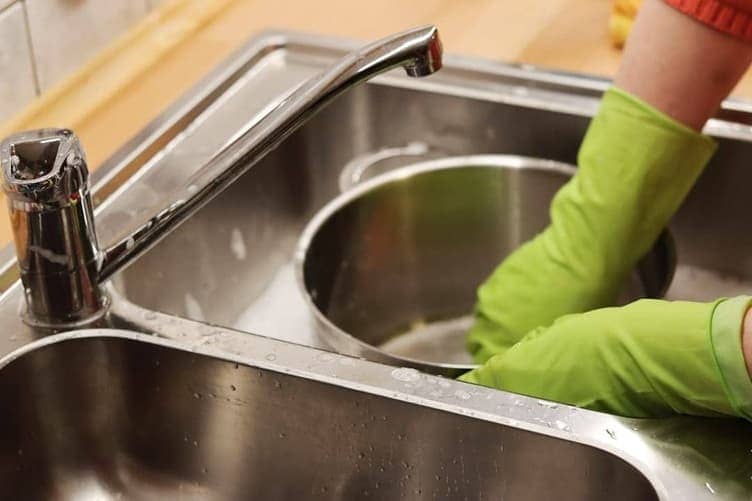
Pour half a cup of baking soda into the drain. Follow it with half a cup of white vinegar. You will hear fizzing, but that is not the reaction eating the clog. Baking soda is a base and vinegar is an acid, and mixing them neutralizes both into sodium acetate, water, and carbon dioxide gas. What you get is fizz and salty water. The bubbling can lift light debris and loosen a film, which is useful, and the hot flush afterward does most of the real work. Cover the drain with a wet cloth or plug so the fizz stays in the pipe instead of foaming up into the sink. Wait 15 to 30 minutes. Then flush with very hot water, using boiling water only if your pipes are metal. Between the fizzing and the hot flush, this shifts light soap scum and food residue without putting anything corrosive in your pipes. It will not clear a solid plug of grease. Dish soap and hot water handle a greasy film, but a solid plug has to come out by hand from the P-trap in step 4.
Good to know: For kitchen sinks with grease buildup, add a squirt of dish soap before the hot water flush. Dish soap is a degreaser and helps break down the oily residue that baking soda alone might not dissolve.
Clean the P-trap if the clog persists
The P-trap is the curved section of pipe under the sink shaped like the letter P or U. If a chemical drain cleaner has gone down this drain, put on rubber gloves and safety goggles before you open the trap. Drano warns that its product may still be in a drain that did not clear, and the water in the trap pours out when you open it. Place a bucket underneath it. Unscrew the slip nuts on both ends by hand. Most P-traps have plastic nuts you can turn without tools. Pull the curved section down and let the water drain into the bucket. Check inside for clogs. You will often find a solid plug of gunk in the curve. Clean it out, rinse the trap, and screw it back on. Run water to check the seal for leaks.
Prevent future clogs
Use a mesh drain cover over shower and bathroom drains to catch hair before it goes down. In the kitchen, scrape plates into the trash before rinsing. Never pour cooking grease or oil down the drain. It solidifies inside the pipe and builds up over time. Once a month, run very hot tap water down the drain with a squirt of dish soap, which is the part that actually moves grease, and add the baking soda and vinegar first if you like the fizz. It takes about a minute and keeps buildup from reaching the point of a full clog.
If the drain is still blocked after you have cleaned the trap, the clog is past the sink, so call a plumber, and do it sooner if other drains are slow too (the FAQs below explain why). Once it runs freely, fit a mesh drain cover and do the monthly hot water and dish soap flush from step 5 to keep it that way. If the problem is a clogged toilet rather than a sink or shower drain, that requires a different approach. Our guide on how to unclog a toilet covers plunging technique, the hot water trick, and when a toilet auger is the right call.
Questions we get asked about this
Answers from experience, not a textbook.
They work in some cases, but we do not recommend them as a first choice. Poison Control lists their working ingredients as enzymes, sulfuric and hydrochloric acids, and sodium and potassium hydroxide, which is to say strong acids and strong alkalis. It describes them as effective but potentially poisonous. Injury happens when the product splashes back, which is most likely if you pour from too high up or empty too much into a drain that is already completely blocked. And never follow one cleaner with another. Washington State's health department notes that bleach reacts with drain cleaners and other acids to give off chlorine gas, which irritates eyes and airways at low levels. If someone swallows any of it, gets it on their skin, or breathes the fumes, call Poison Control on 1-800-222-1222. The mechanical methods above put nothing corrosive in your pipes or near your skin, so use them first.
Buildup inside the pipe can smell even when water drains fine. Bacteria feed on the gunk coating the pipe walls. A hot water flush with a squirt of dish soap usually removes the film they are feeding on, and that gets rid of the smell. If the smell is like rotten eggs, it could be a dried-out P-trap. Run the tap until water flows down the drain, which refills the trap and blocks sewer gas from rising up.
Yes, a flat-bottom cup plunger works on sinks. Never plunge a drain that has had a chemical drain cleaner poured into it. Drano warns that its product may still be in a drain that did not clear, and plunging can splash it back at you. Otherwise, follow the plunger maker Korky's sink instructions. Cover every other opening with a wet rag so the pressure goes into the clog, including the overflow hole, a dishwasher vent, and the second drain of a double sink. Add enough water to cover the base of the plunger. Tilt the plunger in so the cup fills with water, cover the drain completely, pump up and down for 10 to 15 seconds, and then break the seal. Repeat until the water drains, then run hot tap water to flush out the loosened debris. This can dislodge clogs that are just past the drain opening. It does not work well on deep clogs or grease buildup.
Call a plumber if multiple drains are clogged at the same time, which can point to a problem in the main sewer line. Also call if you have tried all the methods above and the drain is still blocked, if you notice water backing up into other fixtures when you flush or run the sink, or if there is a persistent sewer smell that refilling the P-trap does not fix. Main line clogs require a professional drain snake or camera inspection.
Home Maintenance 101
How to Clean a Microwave
How to Fix a Running Toilet
How to Unclog a Drain
← you’re hereHow to Paint a Room
How to Clean an Oven
How to Hang a Picture
How to Unclog a Toilet
How to Remove a Stripped Screw
How to Remove Rust from Metal